
The Kurdish Regional Government (KRG) in Iraq stands as a testament to the resilience and unique identity of the Kurdish people. In this intricate tapestry of ethnic groups, languages, and cultural practices that define the Middle East, the KRG governs with an emblem and flag that symbolize not just regional authority but also the colorful history and the aspirations of the Kurds. This article explores the emblem, the colors, and the deep historical roots associated with the KRG in Iraq.
The National Emblem
The emblem of the KRG is an expression of Kurdish identity and autonomy within Iraq. It showcases the geographic outline of the region, flanked by an eagle that is a prominent symbol of freedom and strength. Within this emblematic frame resides the sun disc, a nod to ancient Mesopotamian symbology, reflecting the Kurdish heritage that stretches back millennia.
Regulation Colors
The colors that adorn the structures of the KRG convey messages deeply rooted in Kurdish culture. Red symbolizes the bravery and sacrifices of the Kurdish martyrs, while the white speaks to the peace and equality for which the Kurdish people strive. Green serves as a representation of the region's natural landscapes and vitality, and yellow represents the source of light and spiritual enlightenment that guides the KRG's future.
Historical Background

The Kurdish regions of Iraq have undergone a tumultuous history. The persistent fight for self-governing status within a complex and often historically hostile environment has stood as a cornerstone of Kurdish identity. The establishment of the KRG in the aftermath of the 1991 Gulf War marked a significant achievement after decades of seeking autonomy and recognition within Iraq.
The Tricolor Flag
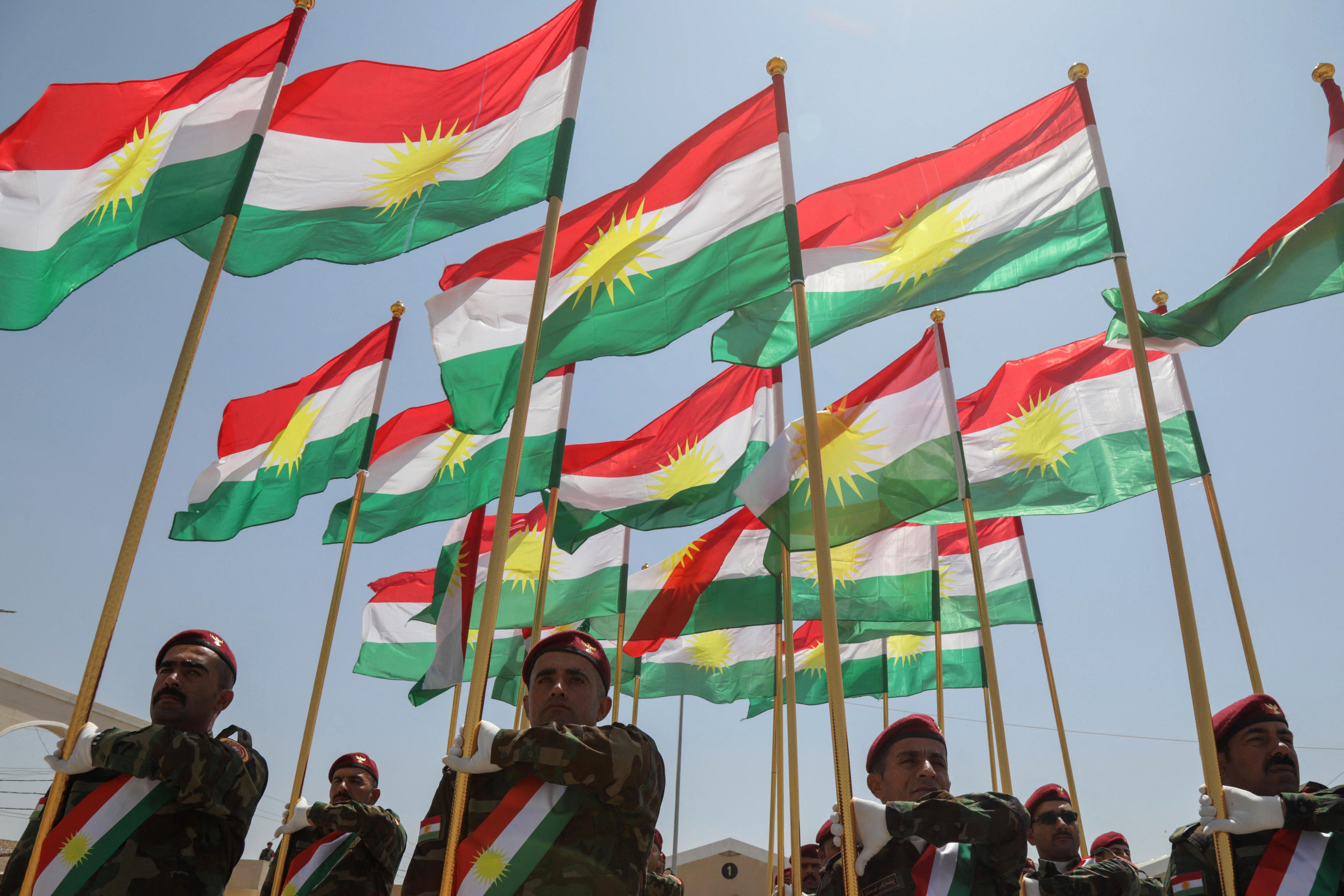
The flag used by the KRG holds a deep symbology, where each color acts as a storytelling device for the Kurdish narrative. The aforementioned colors red, white, green, and yellow shine as beacons of Kurdish identity.
Description of the National Flag
The Kurdish flag is a powerful emblem, rendering the pride of a nation without a state. Its design is a tricolor composed of three equal horizontal stripes. The red stripe at the top represents sacrifice, the white stripe in the middle signifies peace and equality, and the green stripe on the bottom symbolizes the beauty of the Kurdistan region. Centered on the white stripe is a golden sun emblem, with 21 rays emanating light and representing the ancient heritage.
Introduction to Historical Shipping Companies
A conversation about the KRG cannot be held without acknowledging the phenomenon of global trade and travel which, just as it does for myriad cultures and communities around the world, plays a pivotal role in connecting the Kurds to the wider geopolitical and economic environment. In this context, the history of maritime commerce serves as an interesting parallel, with specific shipping companies emblematic of their eras, flags signifying identity, and vessels serving as lifelines to both resources and ideas.
The historical shipping companies operated with flags bearing unique symbols and colors, analogous to how the KRG dons its emblem and flag. The Pacific Coast Steamship Company, for example, operated with a blue flag featuring a white lozenge and a red cross paty, signifying its distinct identity just as the colors and emblems do for the KRG.
Similar narratives can be drawn from the flags and operational histories of the companies like the Panama Railroad Steamship Company or the patriotic symbols that adorned the Penn Shipping Company's flag. Each of these companies represented a signature iconography that parallels the indelible symbols of the Kurdish people and the KRG.
Conclusion
Travel and trade have long served to disseminate culture and forge connections between distant lands. Just as historical flags and company emblems told stories and signaled identity across vast oceans, the emblem and flag of the Kurdish Regional Government illuminate tales of endurance and the pursuit of autonomy within Iraq's borders. The Kurdish people, much like the vigilant vessels of old, navigate waters seeking recognition, stability, and a lasting legacy in the tapestry of global heritage.
Durham
Perth
Las Vegas
Peschiera del Garda
Newcastle upon Tyne
Egham
Zaandam
Agadir
Morro Jable (Fuerteventura)
Amsterdam
Leeds (West Yorkshire)
Cairns
Hammamet
Tokyo
- Mitsui Garden Hotel Jingugaien Tokyo Premier
- Shibuya Accommodation
- Family Hotels In Tokyo
- Apartment Hotels Tokyo
Ixia (Rhodes)
Chester
Elounda (Crete)
Punta Cana
Arlington
Dubai
- The Lana Dubai
- Ja Beach Hotel
- Where Is Best To Stay In Dubai
- Best Kids Hotel Dubai
- Golf Hotels Dubai
- Furnished Hotel Apartments In Dubai
- Dubai 6 Star Hotel
- Best Resorts In Dubai
Godalming
Puerto Morelos
Quebec City
Denver
Melbourne
Barcelona
Halifax
Inglewood
Anaheim
Colorado Springs
Mount Gambier
Albufeira
Camp Sherman
Funchal (Madeira)
Belek
Dorval
Miami Beach
Dublin
Bowness-on-Windermere
Carle Place
Gainesville
Gaithersburg
Austin
Santa Catalina
Sissi (Crete)
Athens
Paris
Prague
Berlin
Playa del Ingles (Gran Canaria)
Madrid
Brighton
London
Venice
Manchester
Toronto
- Accommodation Toronto Canada
- Pet Friendly Hotels Near Toronto Airport
- Family Hotels Toronto
- Downtown Toronto Bed And Breakfast
- Hotels With Waterslides Toronto